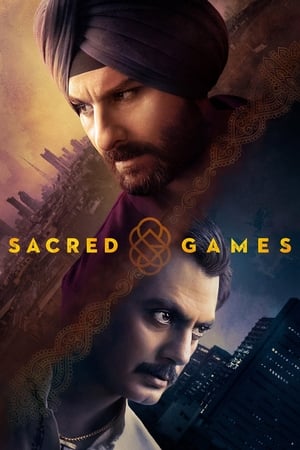
Sacred Games Ending Explained — Did Mumbai Survive the 25 Days?
The Sacred Games Season 2 finale left millions of viewers staring at the screen, wondering what actually happened to Mumbai, to Sartaj, and to Guruji's prophecy. Here is a full spoiler-heavy breakdown of the ending, the symbolism, and the unanswered questions — six years later.
Warning: this post contains complete spoilers for both seasons of Sacred Games, including the ending. If you have not watched the show yet, stop here and stream Sacred Games on Bowood.TV first — both seasons, no subscription needed.
When Netflix released Sacred Games Season 2 in August 2019, it landed into an Indian streaming landscape that the show itself had helped create. Two years earlier, Season 1 had been Netflix's first Indian original series, and it had proved — almost single-handedly — that Indian audiences would watch long-form, morally ambiguous, deeply political prestige television. Season 2 had to close that story. For six years, fans have argued about whether it did.
This is a spoiler-heavy explainer, written for viewers who either want to revisit the ending or who finished the show confused and want someone to walk through the final twenty minutes of Episode 8 with them.
Quick Refresher: What Is the 25-Day Countdown?
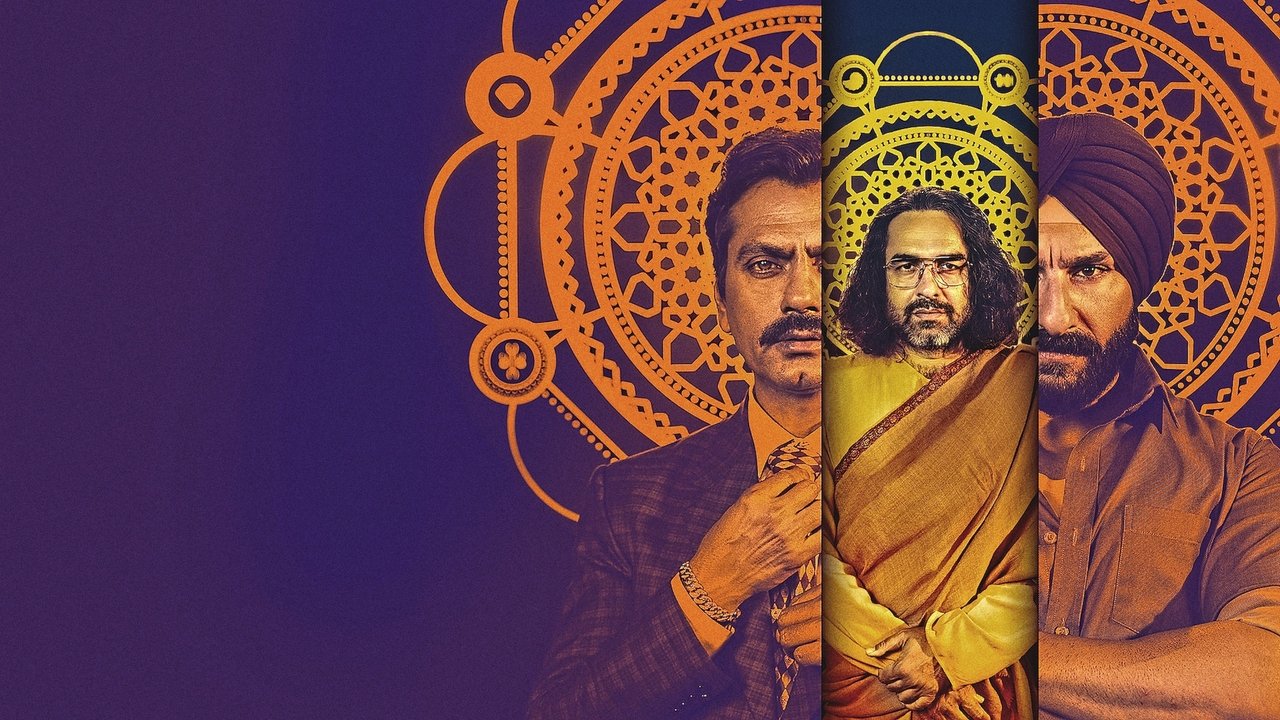
Season 1 opens with gangster Ganesh Gaitonde (Nawazuddin Siddiqui) calling Mumbai police officer Sartaj Singh (Saif Ali Khan) and telling him he has 25 days to save the city. What follows is a parallel story: Gaitonde's decades-spanning autobiography in flashback, and Sartaj's present-day investigation.
By the end of Season 1, we know the threat is connected to Guruji (Pankaj Tripathi), a charismatic godman with an ashram, a nuclear device, and a millenarian vision of remaking the world through apocalypse.
What Actually Happens in the Finale?
Season 2, Episode 8 ("Radcliffe") concludes the 25-day countdown. Here is what we see, stripped of the show's dream-logic and time jumps:
Guruji's plan is real. There is a functional nuclear device, smuggled into Mumbai, hidden inside the Eternal Youth ashram complex. The plan was always to detonate it, triggering what Guruji calls the "great purification" that would create the sixth yuga.
Sartaj gets to the device. Working off information given to him by Gaitonde before his suicide, Sartaj enters the ashram, finds the bomb, and confronts Batya (Kalki Koechlin), who was Guruji's true successor after his death in Season 2.
Sartaj drops Trivedi's briefcase into the water tank. In the final sequence, Sartaj attempts to neutralize the device. The show cuts between the timer ticking down, Sartaj praying, the citizens of Mumbai going about their lives, and a childhood memory of his father.
The screen cuts to black before the timer hits zero.
We never see an explosion. We never see a disarmament. The show ends on ambiguity.
So Did Mumbai Survive?
This is the question that still drives comment threads six years later. The show gives us three pieces of evidence, all of which are compatible with either outcome.
Evidence Mumbai survives:
- The final cut to black is paired with Sartaj's voice saying he has accepted his role. In the logic of the series, acceptance is always tied to redemption.
- The flashes of Mumbai daily life in the closing montage are rendered with a tenderness the show normally reserves for what it wants to preserve.
- Director Neeraj Ghaywan, who directed the final block, has said in interviews that he wanted the ending to be "about faith, not about catastrophe."
Evidence Mumbai does not survive:
- Gaitonde's prophecy was never wrong once over two seasons. Every other thing he told Sartaj came to pass.
- The Trivedi briefcase Sartaj drops is shown leaking, not disarming — the show takes time to establish that water conducts, not contains.
- The entire thematic architecture of the show is built on the idea that the system is rotten beyond individual redemption. A last-second save would contradict everything Sacred Games has said about institutional failure.
Our reading, after multiple rewatches: the ambiguity is the point. The show is adapted from a Vikram Chandra novel that ends the same way — Chandra leaves the reader unsure whether Sartaj's action will work, because the book is not about whether the bomb goes off. It is about whether a morally compromised cop in a morally compromised city can still find a moment of clarity before it is too late.
What the Ending Is Really About
Sacred Games is not primarily a thriller. It is a religious novel dressed as a thriller. Every major character is caught in a cycle they cannot escape — Gaitonde's endless autobiographical monologue, Sartaj's oedipal relationship to his father's legacy, Guruji's belief that the only way to save the world is to destroy it.
The final image of Sartaj with the bomb is, in this reading, an image of a man who has finally stopped running from himself. Whether the bomb goes off or not is theological, not narrative. In the book, and arguably in the show, the bomb is a test of whether faith is possible in a world that has given you every reason to believe nothing.
Why There Was No Season 3
Netflix has confirmed there will not be a Sacred Games Season 3. The creators — Vikramaditya Motwane and Anurag Kashyap — have both said in interviews that the story they set out to tell was always a two-season arc. Chandra's novel ends where Season 2 ends, and expanding beyond it would have meant either sanitizing the ambiguity or inventing new plot machinery to keep the franchise alive.
In an era when every successful show gets stretched into five seasons, Sacred Games walking away after two feels increasingly like the correct decision.
Where Sacred Games Sits in 2026
Watching Sacred Games in 2026 is a strange experience. It is both older than it feels (the political satire about a populist religious movement hitting uncomfortably close to home) and younger than you remember (the pacing of Season 1 is genuinely breakneck by today's standards). It also has, objectively, one of the greatest Indian television performances ever recorded in Nawazuddin Siddiqui's Gaitonde, a role that went on to define his career.
If you have never seen it, or you want to revisit the ending with fresh eyes, you can stream Sacred Games in HD on Bowood.TV with no signup, no subscription, and no region block.
Watch Next
If you want more of what Sacred Games does best — long-form, morally ambiguous, deeply Indian prestige TV — we recommend:
- Mirzapur for the pulpier, gunier cousin.
- Panchayat for the tonal opposite — the antidote to crime drama.
The 25 days are over. Whether Mumbai survived is between you and the screen.