
Katrin Seybold
Known for Directing · 3 credits
- Born
- 1943-07-14
- Died
- 2012-06-27
Biography
Katrin Seybold, born on July 14, 1943, in Bromberg (now Bydgoszcz), Poland, grew up in Stuttgart and studied art history in Tübingen from 1964. She gained her first practical film experience through the experimental film circle at Stuttgart University. In 1968, she dropped out of college and moved to Berlin, where she became politically active: she lived in the women's commune on Türkenstraße and participated in student protests, squatting actions, and the founding of an anti-authoritarian kindergarten. In 1970, she co-directed her first short documentary film, Die wilden Tiere – Rote Knastwoche (The Wild Animals – Red Prison Week), with Gerd Conradt, one of the 18 students expelled from the dffb, for Rechtshilfe München (Legal Aid Munich). The following year, she applied unsuccessfully to the dffb.
In the following years, Seybold worked for the Deutsche Kinemathek foundation and TU Berlin, and gained further film experience as an actress and assistant director on films by Thomas Mauch, Hans Rolf Strobel, and Edgar Reitz.
After breaking with her former employer firm Eikon in 1979 for political reasons, Seybold founded her own production company and, together with Peter Krieg, launched the filmmakers' distribution cooperative. During her first production, “Schimpft uns nicht Zi.” (Don't Call Us Gypsies, 1980; for the TV youth magazine “Direkt”), about discrimination against young Sinti, she met Sinteza Melanie Splita. By 1987, the two women had made three more documentaries about the Sinti, with Splita mostly acting as a consultant, mediator, and author: “Wir sind Sintikinder und keine Zi.r” (We Are Sinti Children and Not Gypsies, 1981), “Es ging Tag und Nacht, liebes Kind. Zi. (Sinti) in Auschwitz” (It Went Day and Night, Dear Child. Gypsies (Sinti) in Auschwitz, 1982) and “Das falsche Wort. Wiedergutmachung an Zi. (Sinte) in Deutschland?” (The Wrong Word. Reparations for Gypsies (Sinti) in Germany?, 1987).
At the same time, Seybold became involved in the AG Dokumentarfilm (Documentary Film Working Group) in 1981 and was appointed as its representative on the selection committee for state film funding. But after she publicly denounced massive political influence by the CSU in funding decisions, she was excluded from the committee. According to her own statement, she received no film funding for almost 20 years as a result. With her options so limited, Seybold worked primarily for television. She shot critical reports for the program “Kontakte” and revealing treatises on the relationship of Germans to Luther (“Ein wild, roh, tobend Volk,” 1983) and Frederick the Great (“Gefahr für den König,” 1986).
Known For
Movies (3)
About Katrin Seybold
Katrin Seybold, born on July 14, 1943, in Bromberg (now Bydgoszcz), Poland, grew up in Stuttgart and studied art history in Tübingen from 1964. She gained her first practical film experience through the experimental film circle at Stuttgart University. In 1968, she dropped out of college and moved to Berlin, where she became politically active: she lived in the women's commune on Türkenstraße and participated in student protests, squatting actions, and the founding of an anti-authoritarian kindergarten. In 1970, she co-directed her first short… With 3 credits spanning from 1970 to 1984, Katrin Seybold has appeared in 3 films and 0 TV shows.
Fans searching for Katrin Seybold movies, Katrin Seybold filmography, or the latest projects starring Katrin Seybold can stream many of these titles on Bowood.TV, free and in HD, with no subscription required.
Most Popular Katrin Seybold Movies
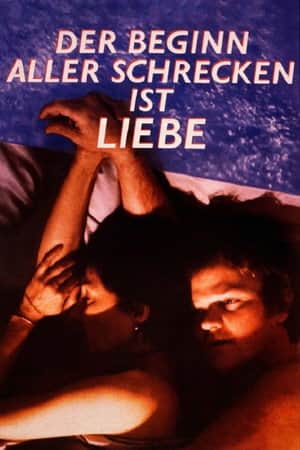
- Love Is the Beginning of All Terror (1984) — as Anna
- Elitetruppe Fleur De Marie (1970)
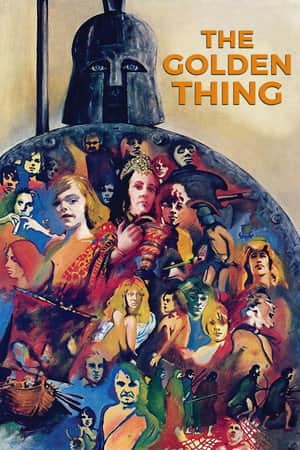
- The Golden Thing (1972) — as Hypsiphile
Where to Watch Katrin Seybold Films
Most Katrin Seybold movies and series are available to stream on Bowood.TV in full HD, completely free and without signup. Browse the complete filmography above to jump directly to any title. For more films and the latest web series featuring Katrin Seybold, check our movies catalogue and browse page.